
Facts About the Capital City of Ulaanbaatar

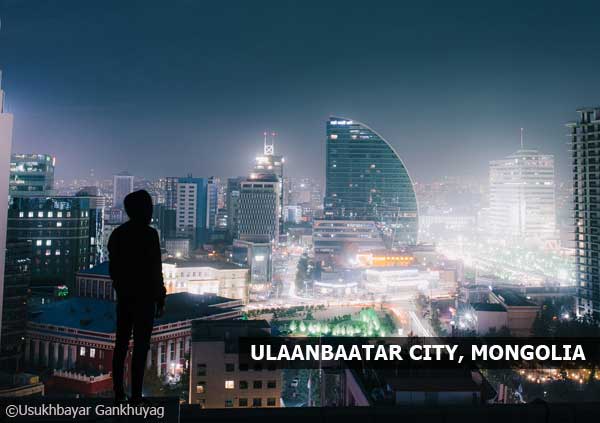
15 Fascinating Facts About Ulaanbaatar, Mongolia's Capital
Ulaanbaatar, Mongolia’s capital and largest city, is a fascinating blend of history, culture, and modern development. Here are 15 updated and detailed facts about this unique city:
Nomadic Origins: Founded in 1639 as a movable monastery, Ulaanbaatar relocated approximately 29 times along the Tuul and Orkhon rivers before settling permanently at its current location in 1778.
Evolution of Names: Throughout its history, the city has been known by various names, including Nomiin Khuree, Da Khuree, and Niislel Khuree, reflecting its religious and administrative significance.
Elevation and Climate: Situated at an elevation of about 1,350 meters (4,430 feet) above sea level, Ulaanbaatar experiences an average annual temperature of approximately -0.8°C (30.6°F), making it the coldest capital city globally.
Population Growth: As of 2025, Ulaanbaatar’s population is estimated at 1,725,000, accounting for nearly half of Mongolia’s total population of approximately 3.5 million.
Administrative Structure: The city is divided into nine districts (düüregs): Baganuur, Bagakhangai, Bayangol, Bayanzürkh, Chingeltei, Khan-Uul, Nalaikh, Songino Khairkhan, and Sükhbaatar. These districts are further subdivided into 173 khoroos (subdistricts).
Urban Expansion: Between 1988 and 2017, Ulaanbaatar’s built-up area expanded from 72.8 km2 to 311.4 km2, reflecting rapid urban development over the past few decades.
Traffic Dynamics: Mongolia follows right-hand traffic rules. However, due to the import of vehicles from countries like Japan, approximately 51.7% of registered vehicles have right-hand steering wheels, leading to unique traffic conditions.
Vehicle Ownership: With a population of over 1.7 million, Ulaanbaatar has a high vehicle density, contributing to significant traffic congestion, especially during peak hours.
Climate Extremes: The city experiences a continental climate with temperatures ranging from an average high of 24°C (75°F) in July to an average low of -28°C (-18°F) in January.
Economic Hub: As Mongolia’s political, economic, and cultural center, Ulaanbaatar hosts major industries, including trade (41%), services (38.7%), industry (8.3%), construction (7.5%), and agriculture (4.6%).
Historical Significance: In 1639, Zanabazar, son of Tusheet Khan Gombodorj, was chosen as the spiritual leader of Khalkha and given the title of Saint. He built his palace on the banks of the Tuul River, which later became Ulaanbaatar city.
Cultural Landmarks: The city is home to numerous cultural and historical sites, including the Gandantegchinlen Monastery, the National Museum of Mongolia, and the Winter Palace of the Bogd Khan.
Educational Institutions: Ulaanbaatar houses the National University of Mongolia, the country’s oldest and most prestigious university, along with several other higher education institutions.
Transportation Hub: The city serves as the central hub for Mongolia’s transportation network, including the Trans-Mongolian Railway, which connects Ulaanbaatar to Russia and China.
Environmental Challenges: Rapid urbanization and increasing vehicle numbers have led to significant air pollution issues, particularly during the winter months when coal is used for heating.
These facts highlight Ulaanbaatar’s rich history, rapid development, and the challenges it faces as a growing urban center in Mongolia.


