
Papier-Mâché in Mongolia

Papier-Mâché in Mongolia
Papier-mâché is a traditional form of handcrafted art made by layering paper strips or pulp onto a mold and bonding them with adhesive. There are two primary methods of creating papier-mâché:
1. Layering paper strips using glue or paste.
2. Using paper pulp, made by soaking or boiling paper until it breaks down, then mixing it with adhesive to form a moldable material.
In Mongolia, papier-mâché (often locally referred to by its crafting function rather than name) plays a significant role in religious art and cultural heritage. The most iconic uses of papier-mâché in the country are seen in:
– Buddhist Tsam mask
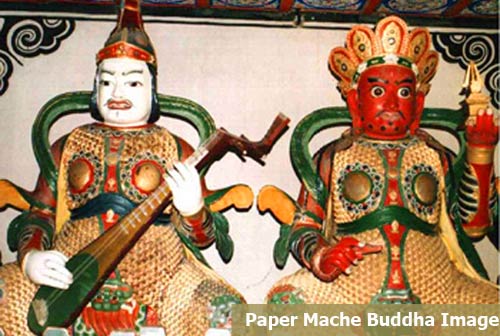
– Sacred Buddha images and ritual statues
Tsam Dance Masks
One of the most prominent examples of Mongolian papier-mâché craftsmanship is the Tsam mask—used in the Tsam dance, a ceremonial ritual rooted in Tibetan Buddhism, introduced to Mongolia in the 18th century. These elaborate masks represent wrathful deities, protectors, and symbolic animals used to drive away evil spirits and purify the space.
Tsam masks are traditionally crafted by casting layers of paper and cloth over a clay mold, often made by monks or temple artisans. Once the layered structure dries and is removed from the mold, the surface is polished, carved, and carefully shaped to capture detailed facial features and symbolic designs. Afterward, the mask is painted with vibrant colors and decorated with textiles, metal ornaments, yak hair, or leather, depending on the deity it represents.
Papier-Mâché Buddha Images
In addition to masks, papier-mâché is also used in creating lightweight Buddha images, particularly portable statues or ceremonial effigies. These statues are similarly made using layered paper or pulp applied over a mold, then intricately refined and painted. Many such pieces are kept in monasteries or national museums, where they serve as important spiritual objects and representations of Mongolian Buddhist artistry.
Conservation and Modern Use
Today, traditional papier-mâché techniques are preserved by skilled artisans and Buddhist communities. While the practice has declined with the rise of modern materials, efforts are being made to revive and document these traditional methods through museum exhibitions, academic research, and cultural heritage programs.
Institutions like the National Museum of Mongolia, Gandan Tegchenling Monastery, and Choijin Lama Temple Museum house some of the finest historical examples of papier-mâché Tsam masks and statues, many of which are over a century old.
In modern Mongolia, papier-mâché is also being rediscovered as an eco-friendly art form, used in schools, workshops, and art festivals to blend traditional skills with contemporary creativity.


