
Shamanism in Mongolia

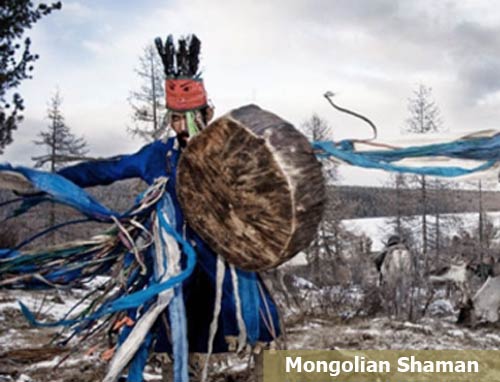
Shamanism in Mongolia
Shamanism in Mongolia is a spiritual tradition where shamans serve as intermediaries between the human and spirit worlds. There are two types of shamans: Lineal and Emerged.
- Lineal shamans inherit their spiritual connection from their ancestors.
- Emerged shamans receive their abilities from external spirits rather than ancestral lineage.
Shamans, often referred to as “messengers” or “intercessors,” communicate with spirits through their mind and body. During rituals, a spirit speaks through the shaman, while a helper, known as a Tushee or interpreter, assists in conveying the messages.
Black and White Shamanism
Mongolian shamanism is divided into two categories based on the nature of the spirits:
- Black shamans connect with fierce spirits from the south, often associated with power and force.
- White shamans rely on wisdom and intellect rather than sheer force.
Male shamans are called Zairan, while female shamans are known as Udgan.
Beliefs in Mongolian Shamanism
Mongolian shamanism revolves around the worship of the Tenger (the Sky), which is considered the supreme force overseeing nature, land, water, plants, and animals. In this belief system:
The sky is seen as male (Father) and the earth as female (Mother).
When a person dies, their soul ascends to the sky, while their physical body is absorbed by the earth.
The pantheon of spirits includes 99 Tenger, with 55 benevolent (white) spirits and 44 fearsome (black) spirits.
Shamanic Clothing and Equipment
Shamans wear sacred clothing and use special tools during rituals to connect with the spirit world.
Deel (Robe): Considered the shaman’s armor, it protects them from negative spirits.
Hat: Represents the “head” of the spirit communicating through the shaman. It often features a face cover, feathers, and engraved eyes and ears.
Boots: Symbolize the “feet” of the spirit entering the shaman’s body. They are typically made from buckskin.
Drum: The shaman’s means of spiritual travel. The type of animal skin used in its creation determines the spirit animal that aids in the journey.
Drumstick: Functions as the whip for the shaman’s spiritual ride.
Jaw Harp: An instrument used to soothe spirits and summon them.
Mirror: A copper or bronze plate worn by the shaman to protect against curses and malevolent spirits.
Mongolian shamanism continues to be a deeply rooted spiritual tradition, preserving ancient connections between humans, spirits, and nature.


