
Khubilai Khaan: The Emperor Who Unified an Empire

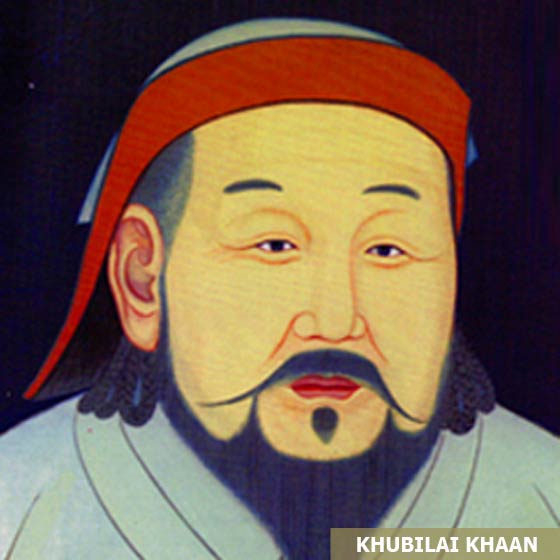
Khubilai Khaan: The Emperor Who Unified an Empire
Khubilai Khaan, born in 1215 to Queen Sorghaghtani Beki and Tolui, the youngest son of Chinggis Khaan, emerged as one of the most prominent leaders in Mongolian and world history. Favored by his grandfather, Emperor Chinggis, and grandmother, Queen Börte, Khubilai grew up under the wise guidance of his mother, renowned for her intelligence and foresight.
Rise to Power
Upon the sudden death of his elder brother, Emperor Munkh, in 1259, Khubilai became a contender for the throne. This succession was anything but smooth, leading to a fierce rivalry with his younger brother, Ariq Böke. Their dispute culminated in a civil war, reaching a decisive battle in 1264 at Ganga Lake, south of the Great Gobi Desert. Khubilai emerged victorious, solidifying his claim as the Emperor of the vast Mongol Empire.
Establishment of the Yuan Dynasty
In 1271, Khubilai officially declared the establishment of the Great Yuan Dynasty, marking the first time in history that all of China fell under foreign rule. The Great Yuan Dynasty, with its capital moved from Kharkhorum to Beijing, stretched impressively from the Pacific Ocean in the east to the Ural Mountains in the west, and from Siberia in the north to Afghanistan in the south. At its height, the dynasty governed approximately one-fifth of the world’s total land area.
Military Ambitions and Challenges
Khubilai’s military ambitions extended beyond mainland Asia. In 1274, he ordered the construction of a massive fleet comprising around 900 ships, launching an invasion against Japan through Korea. Initially, Mongolian forces succeeded in capturing the islands of Tsushima and Iki, reaching as far as Kyushu Island. However, a fierce storm at Hakata Bay severely damaged the fleet, resulting in the sinking of 200 ships and the loss of over 1,300 soldiers. This event marked the unsuccessful first Mongol invasion of Japan.
Cultural and Historical Legacy
Despite setbacks, Khubilai successfully conquered the Song Dynasty, solidifying his rule across all of China. He notably declared Buddhism the state religion, significantly influencing cultural and spiritual life in the empire. Remarkably, the modern-day currency of China, the “Yuan,” still carries the legacy of Khubilai’s powerful dynasty.
Death and Historical Significance
Khubilai Khaan passed away on February 18, 1294, at the age of 78. His extraordinary life and reign were meticulously documented by Marco Polo, the famed Italian explorer, merchant, and writer, whose writings brought Khubilai’s remarkable achievements to the wider world. Khubilai’s rule reshaped Asia and left a lasting impact that continues to echo through history.


