
Mongolian Geography


Mongolian Geography
Mongolia, a vast landlocked nation in East Asia, is renowned for its diverse geography, encompassing expansive steppes, towering mountain ranges, arid deserts, and abundant waterways. Below is an updated overview of Mongolia’s geographical features, incorporating the latest data and insights.
General Overview
Location and Size: Mongolia is situated between Russia to the north and China to the south, covering an area of 1.566,600 square kilometers, making it the 19th largest country globally.
Population and Density: As of 2025, Mongolia’s population is estimated at 3.5 million, resulting in a population density of about 2.26 people per square kilometer, one of the lowest globally.
Climate and Seasons: Mongolia has a continental climate with four distinct seasons. Winters are long and cold, with temperatures often dropping to -30°C, while summers are short and warm, reaching up to 35°C in some areas. The country sees low rainfall and experiences sharp seasonal contrasts.
Physical Features

Mountains
Mongolia’s topography is dominated by several major mountain ranges:
Altai Mountains: Stretching across the western and southwestern regions, the Altai Mountains are the highest in Mongolia. Notable peaks include Khüiten Peak at 4,374 meters, Nairamdal at 4,180 meters, Bürged at 4,068 meters, Malchin at 4,050 meters, and Olgii at 4,050 meters.
Khangai Mountains: Located in central Mongolia, these older, more eroded mountains feature forests and alpine pastures. The highest point is Otgontenger at 4,031 meters.
Khentii Mountains: Situated in the northeastern part of the country, the Khentii Mountains are known for their rugged terrain and pristine wilderness. The highest peak is Asralt Khairkhan at 2,800 meters.
Rivers and Lakes
Mongolia boasts an extensive network of rivers and lakes:
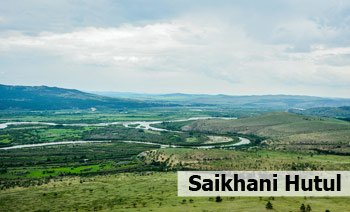
Rivers: The country has over 4,000 rivers, with the Orkhon River being the longest at 1,124 kilometers. These rivers contribute to three major drainage basins: the Arctic Ocean, the Pacific Ocean, and the Central Asian Endorheic Basin.
Lakes: There are approximately 3,000 lakes in Mongolia. The largest is Uvs Lake, covering about 3,350 square kilometers, while Khuvsgul Lake is the deepest at 238 meters. These lakes play a crucial role in the country’s ecology and are vital water sources for both humans and wildlife.

Gobi Desert
The Gobi Desert, stretching across southern Mongolia and northern China, is one of the largest deserts in Asia, covering about 1.3 million square kilometers. Unlike many deserts, only around 5% of the Gobi is sand dunes; the rest is made up of gravel plains, rocky outcrops, and dry steppes. Temperatures range from -30°C in winter to around 40°C in summer, reflecting its harsh continental climate. The Gobi is world-renowned for its dinosaur fossil discoveries and is home to rare wildlife like the Bactrian camel, snow leopard, and the endangered Gobi bear (Mazaalai).
Natural Resources and Ecology
Mongolia’s diverse landscapes support a variety of ecosystems:
Pasturelands: Approximately three-fourths of Mongolia’s land area consists of pasturelands, supporting immense herds of grazing livestock, which are central to the traditional nomadic lifestyle.
Forests: Forests cover about 8% of the country’s territory, primarily in the northern regions, providing habitats for numerous wildlife species and contributing to the ecological balance.
Deserts and Semi-Deserts: The Gobi Desert and surrounding semi-arid regions constitute significant portions of Mongolia’s landscape, characterized by unique flora and fauna adapted to harsh conditions.
Mongolia’s geography, marked by its vast steppes, towering mountains, expansive deserts, and abundant waterways, plays a pivotal role in shaping its culture, economy, and way of life. The country’s natural beauty and ecological diversity continue to captivate and inspire both residents and visitors alike.


