
Strictly Protected Areas in Mongolia

Strictly Protected Areas in Mongolia
Mongolia is home to some of the world’s most pristine and ecologically significant landscapes. To preserve its rare wildlife, fragile ecosystems, and culturally important sites, the country has designated 22 Strictly Protected Areas (SPAs). These areas are protected under national law and are managed with a strong focus on conservation. While access is often limited to minimize human impact, many SPAs offer opportunities for eco-tourism and scientific research. They play a vital role in preserving Mongolia’s unique biodiversity and natural heritage. Below are some of the most notable SPAs that attract both local and international travelers.
Great Gobi SPA
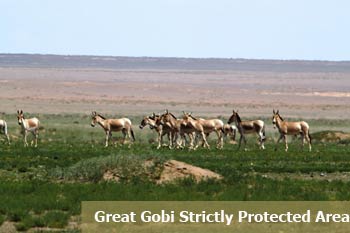
The Great Gobi Strictly Protected Area was established in 1976 by a resolution of the People’s Great Khural (National Assembly), Mongolia’s highest legislative authority. In 1991, it was recognized as part of UNESCO’s International Biosphere Reserve Network for its ecological importance.
The area is divided into two distinct zones:
Part A: Located along the southern borders of Bayankhongor and Gobi-Altai aimags, this zone spans approximately 46,333 km² and is characterized by vast arid desert landscapes, hosting endangered species such as the wild Bactrian camel (Camelus ferus) and the Gobi bear (Ursus arctos gobiensis).
Part B: Situated south of Khovd and Gobi-Altai aimags, this zone covers 18,357 km² and contains rare desert-steppe ecosystems, serving as a critical habitat for numerous desert-adapted flora and fauna.
Khukh Serkh mountain range SPA
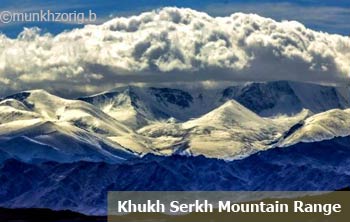
The Khukh Serkh Mountain Range SPA is located along the border of Khovd and Bayan-Ulgii aimags, southeast of Gurvan Tsast Uul in the Mongol Altai Mountains. It was designated as a Strictly Protected Area in 1977 and spans 757.5 km².
Named after the adult male Siberian ibex (“Khukh Serkh”), the area is known for its rugged alpine terrain and rich biodiversity. It is a key habitat for snow leopards, argali sheep, ibex, and other mountain wildlife. The range also supports birds of prey such as lammergeiers and golden eagles, along with rare alpine plants.
As part of the Altai-Sayan eco-region, Khukh Serkh plays an important role in high-mountain conservation. While public access is limited, the area supports scientific research and wildlife monitoring to protect endangered species and preserve its unique ecosystems.
Bogd Khaan Uul SPA

Bogd Khan Uul SPA is located on the southern edge of the Khentii Mountain Range, just south of Ulaanbaatar, where the forest-steppe transitions into steppe zones. The protected area spans 422.71 km² and is covered in larch forests that help regulate the local climate and contribute to the relatively favorable weather conditions in the capital.
Bogd Khan Uul is notable for being one of the oldest legally protected natural areas in the world. In 1294, during the reign of the Great Yuan Dynasty, a decree was issued to protect the mountain due to its sacred status and ecological importance—making it a pioneering example of environmental conservation in global history.
The mountain is rich in biodiversity, home to species such as red deer, roe deer, foxes, wild boar, and a variety of birdlife including eagles, owls, and woodpeckers. Its diverse habitats also support rare plant species, including medicinal herbs.
Today, Bogd Khan Uul serves both as a natural sanctuary and a recreational area, with designated hiking trails and panoramic viewpoints that attract nature lovers and locals alike. While parts of the area are accessible to visitors, core zones remain strictly protected for conservation and research.
Khasagt Khairkhan mountain SPA
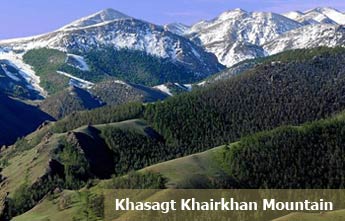
Khasagt Khairkhan Mountain, located along the southern bank of the Zavkhan River in western Gobi-Altai aimag, spans 267.6 km². Its peak rises to 3,578 meters above sea level, making it one of the tallest mountains in the region.
The area features rugged alpine terrain, rocky cliffs, and steppe valleys that support a wide range of wildlife. It is an important habitat for rare and endangered species such as snow leopards, argali sheep (Ovis ammon), ibex, red deer, elk, martens, and birds of prey like golden eagles and vultures.
In addition to its ecological value, Khasagt Khairkhan holds cultural and spiritual significance for local communities. As a Strictly Protected Area, it is reserved for conservation and scientific research, helping preserve western Mongolia’s unique mountain biodiversity.
Khan Khentii SPA
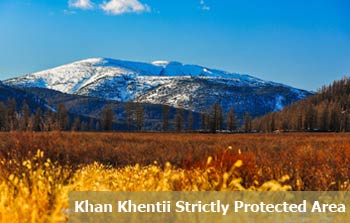
Covering 17,481 km² across parts of Khentii, Tuv, and Selenge aimags, the Khan Khentii SPA encompasses the heart of the Khentii Mountain range. Its highest point, Asralt Khairkhan, reaches 2,799.3 meters above sea level.
The area is of great historical and cultural significance as it includes Burkhan Khaldun Mountain, traditionally regarded as the birthplace and burial site of Genghis Khan. This sacred landscape is covered by taiga forests, alpine meadows, and steppe zones, supporting a wide variety of plant and animal species.
The region is home to key wildlife such as moose, brown bear, lynx, wolves, and roe deer, along with rare birds like black storks and Siberian cranes. With its rich biodiversity and deep cultural roots, Khan Khentii serves as both a vital conservation zone and a symbol of Mongolia’s natural and historical heritage.
Nomrog basin SPA
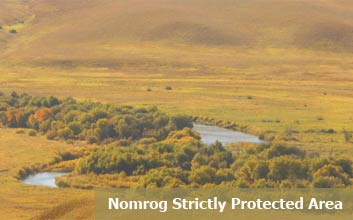
The Nomrog SPA, also known as the Khalkh Nomrog Basin, is located in Khalkhgol soum of Dornod aimag and covers an area of 5,877.4 km². It was designated a Strictly Protected Area in 1992 and is the only region in Mongolia that links the forest-steppe ecosystems of the Greater Khingan Mountains with the dry steppes of Central Asia.
This unique transitional landscape serves as a vital ecological corridor, supporting high biodiversity and enabling the movement and interaction of species between different biomes. It provides critical habitat for rare and endangered species, including the Amur hedgehog, wild boar, lynx, and various migratory birds.
The Nomrog River and its surrounding wetlands are essential for maintaining regional water balance and support a rich aquatic ecosystem. The area also holds scientific value due to its mix of Siberian and Central Asian flora and fauna, making it an important site for biodiversity research and environmental monitoring.
Dornod Mongol SPA
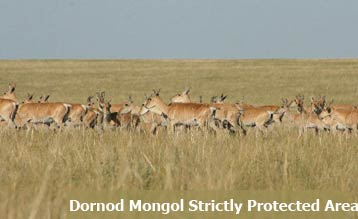
Established in 1993 by Resolution No. 28 of the Mongolian Parliament, the Dornod Mongol SPA spans 5,899 km² across southeastern Dornod aimag and eastern Sukhbaatar aimag, along the state border.
The area’s elevation ranges from 709 meters in the Laga Strait to 1,099 meters at the White Mountain of Wan. The region protects expansive dry steppe ecosystems, which are among the last remaining undisturbed grasslands in Central Asia. It is home to a variety of endangered and endemic species, including Mongolian gazelles, Pallas’s cats, and steppe eagles.
The Dornod Mongol SPA plays a vital role in maintaining grassland biodiversity and ecological balance. It also serves as a major migratory route for ungulates and birds, particularly the globally significant herds of Mongolian gazelles. Due to its vast open landscapes and minimal human disturbance, the area is crucial for long-term wildlife monitoring and steppe conservation efforts.
Mongol Daguur SPA
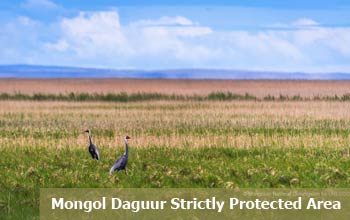
The Nomrog SPA, also known as the Khalkh Nomrog Basin, is located in Khalkhgol soum of Dornod aimag and was designated a Strictly Protected Area in 1992. It is the only region in Mongolia that forms a natural bridge between the forest-steppe ecosystems of the Greater Khingan Mountains and the dry steppes of Central Asia, making it ecologically unique and highly significant.
The SPA is divided into two sections:
Section A, which covers 928.8 km², and
Section B, spanning 1,029.26 km²,
bringing the total protected area to 1,958.06 km².
This transitional zone provides critical refuge for a wide range of species and acts as an important ecological corridor for wildlife movement between forested and arid regions. It supports species such as lynx, wild boar, Amur hedgehogs, and numerous migratory birds, while also preserving rare plant communities characteristic of both Siberian and Central Asian environments.
The Nomrog River and its wetlands are essential for sustaining biodiversity and maintaining regional water balance. Due to its remote location and limited human access, the area is valuable for scientific research and long-term ecological monitoring.
Otgon Tenger Mountain SPA
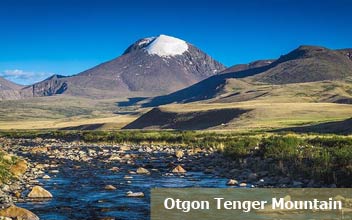
Otgontenger Mountain, the highest peak in the Khangai Mountain Range, is located in Otgon and Aldarkhaan soums of Zavkhan aimag. The mountain rises to 4,008 meters above sea level and is considered sacred, having been officially worshiped since 1779.
The Otgontenger SPA covers an area of 1,029.26 km² and features diverse landscapes, including alpine meadows, glaciers, rocky cliffs, and forested slopes. It is also known for its approximately 50 mineral springs, with temperatures ranging from 13°C to 55°C.
The area supports a range of rare and endangered wildlife, including snow leopards, Siberian ibex, marmots, and birds of prey such as golden eagles. Its ecological and cultural importance makes it one of Mongolia’s most significant high-mountain conservation areas.
Uvs Lake basin SPA
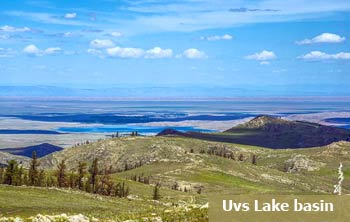
Designated in 1993 by Resolution No. 83 of Parliament, the Uvs Lake Basin Strictly Protected Area covers 4,412.2 km² and includes Uvs Lake itself, along with surrounding natural landmarks such as the Turgen Mountains, Tsagaan Shuvuut, Torkhilog River, and Altan Els sand dunes.
This ecologically diverse region encompasses nearly all of Mongolia’s natural zones and belts—ranging from the Gobi desert and dry steppe to alpine forests, glaciers, and high mountains. It is internationally recognized as both a UNESCO World Biosphere Reserve and World Heritage Site due to its exceptional biodiversity and global importance in conservation.
The basin is home to numerous rare and endangered species, including the saiga antelope, snow leopard, Asiatic ibex, and Siberian crane. Its wetlands and lakes serve as vital breeding and stopover habitats for migratory birds. With minimal human impact, Uvs Lake Basin remains one of the most pristine and scientifically valuable ecosystems in Central Asia.
Small Gobi SPA
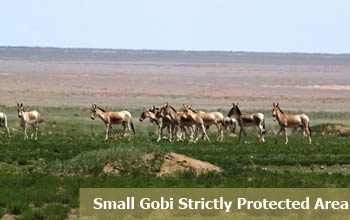
The Small Gobi SPA, also known as “Gobiin Baga,” is divided into two sections—Part A and Part B—spanning areas of Nomgon, Bayan-Ovoo, and Khanbogd soums in Umnugovi aimag, and Khatanbulag soum in Dornogovi aimag. The total protected area covers 18,300 km².
This area preserves distinctive southeastern Gobi habitats and supports rare and endangered species such as the Asiatic wild ass (Equus hemionus), black-tailed gazelle (Gazella subgutturosa), and wild argali sheep. The landscape features rocky outcrops, rolling sand dunes, dry riverbeds, and vast desert grasslands that sustain a unique and resilient ecosystem.
In addition to its ecological value, the Small Gobi SPA plays a critical role in transboundary wildlife conservation, particularly for wide-ranging species like the wild ass. The area is also important for studying desert adaptation, climate resilience, and the interactions between flora and fauna in extreme arid conditions. Limited human activity and protected status help ensure the long-term preservation of this iconic desert environment.
Horidol Saridag SPA
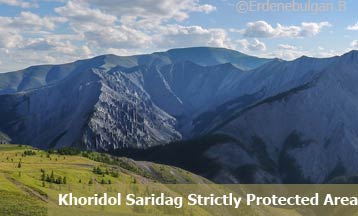
Established in 1997, the Horidol Saridag Strictly Protected Area lies in Hövsgöl aimag and covers 2,266.7 km². It represents the high mountain belt of the Horidol Saridag Range, part of the greater Sayan Mountain system in northern Mongolia.
This picturesque region is renowned for its rugged beauty, rich biodiversity, and largely untouched natural landscapes. It is home to Mongolia’s highest waterfall—the Arsain River Waterfall—which cascades 70 meters down rocky cliffs. The area provides habitat for mountain wildlife such as ibex, lynx, marmots, and a variety of alpine and boreal plant species.
The SPA also includes stretches of taiga forest, glacial valleys, and subalpine meadows, making it a hotspot for endemic species and ecological research. Its proximity to Lake Hövsgöl enhances its importance as part of a broader conservation network, and the area plays a critical role in preserving the headwaters of several northern rivers and maintaining regional climate stability.


